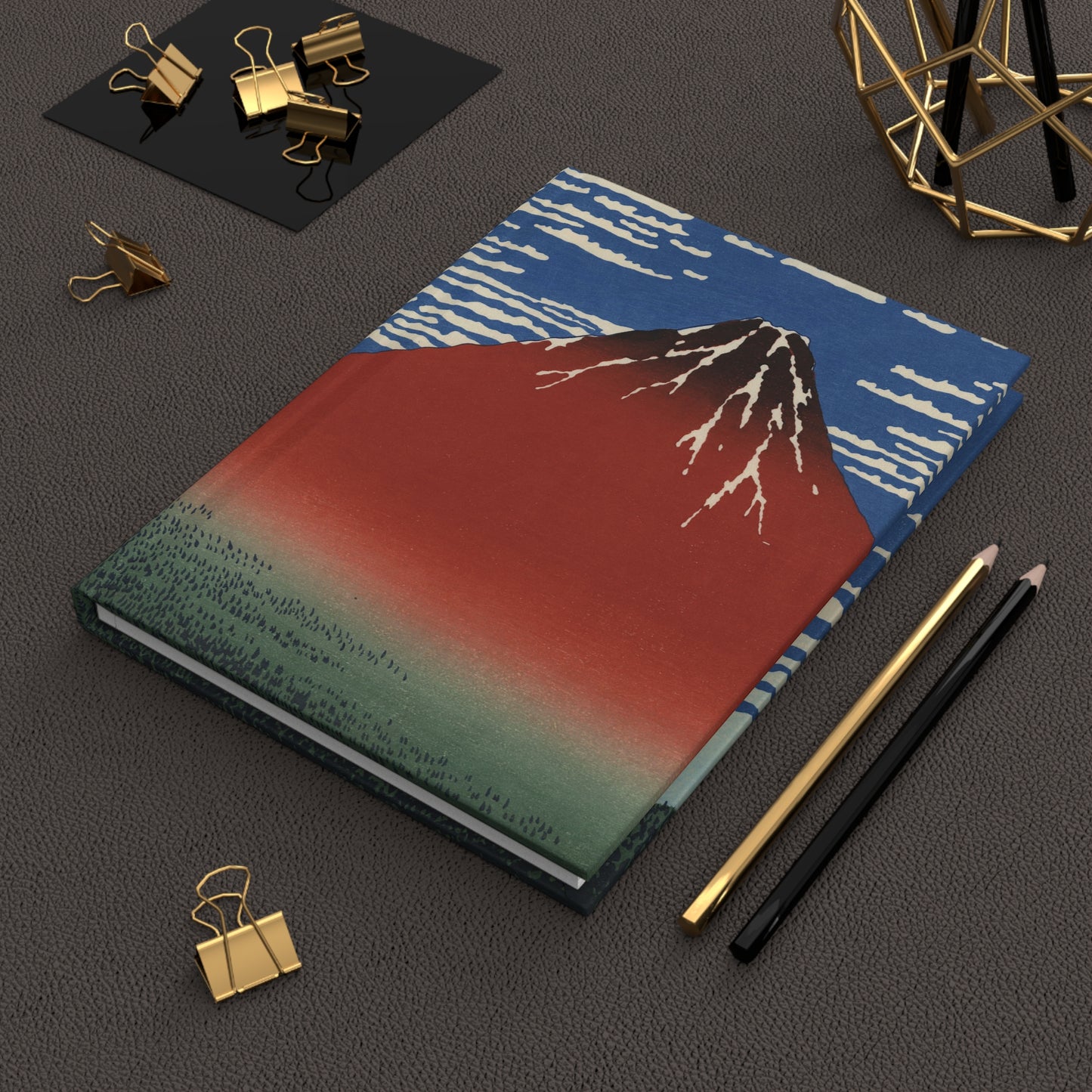
006 : Hokusai - Fine Wind, Clear Morning (Red Fuji)
The Visual Language: Composition & Detail
Katsushika Hokusai’s Fine Wind, Clear Morning (commonly known as Red Fuji) from the Thirty-Six Views of Mount Fuji series is a striking masterpiece of abstraction and color contrast.
The composition is exceptionally bold, filling the frame with the majestic slopes of Mount Fuji and deliberately eliminating any human presence to emphasize nature's vastness and tranquility.
The mountain's vibrant red surface creates a dramatic and beautiful contrast with the deep green of the forest at its base and the vivid Prussian blue (imported bero-ai) of the sky.
Furthermore, Hokusai depicted the dense forest along the lower slopes through an array of meticulously placed dots.
This intricate detailing not only showcases Hokusai's highly stylized design but also highlights the extraordinary skill and concentration of the engravers who faithfully carved his vision into the woodblock.
The Cultural Soul: Symbolism & Philosophy
In Japanese, "Gaifu" refers to a gentle southerly wind that blows during early summer.
This artwork captures a rare phenomenon from late summer to early autumn, when the morning sun illuminates Mount Fuji, dyeing its surface a brilliant red.
Beyond a mere meteorological record, the print reflects the profound spiritual reverence the Japanese people held for the sacred peak.
During the Edo period, a religious movement known as Fuji-ko (Mount Fuji worship) was highly popular among commoners, who viewed climbing and worshipping the mountain as a path to spiritual salvation.
By portraying Fuji in such a pure, unadulterated state—without travelers or the noise of daily life—Hokusai invites the viewer into a realm of eternal stillness and awe, elevating the mountain into a divine monument.
A Tale of Two Visions: Fictional Clouds and the Publisher's Red
While the print feels breathtakingly real, it conceals Hokusai’s artistic manipulations and the commercial realities of the ukiyo-e industry.
Meteorologically, the title indicates a summer wind, yet the sky is filled with lenticular clouds, which typically appear in autumn or winter.
Hokusai intentionally combined different seasonal elements because a soft summer sky would look too weak against the imposing red mountain. He prioritized visual balance and dramatic impact over absolute realism.
Interestingly, the iconic deep red color of the mountain might not have been Hokusai's original intention.
Early printings (first editions) of this work show a much paler, muted reddish-brown with delicate gradations.
It is widely believed that the publisher or printers later intensified the red without Hokusai's permission to make the image more striking and commercially successful, transforming it into the vivid "Red Fuji" we know today.
 Katsushika Hokusai (1760–1849)