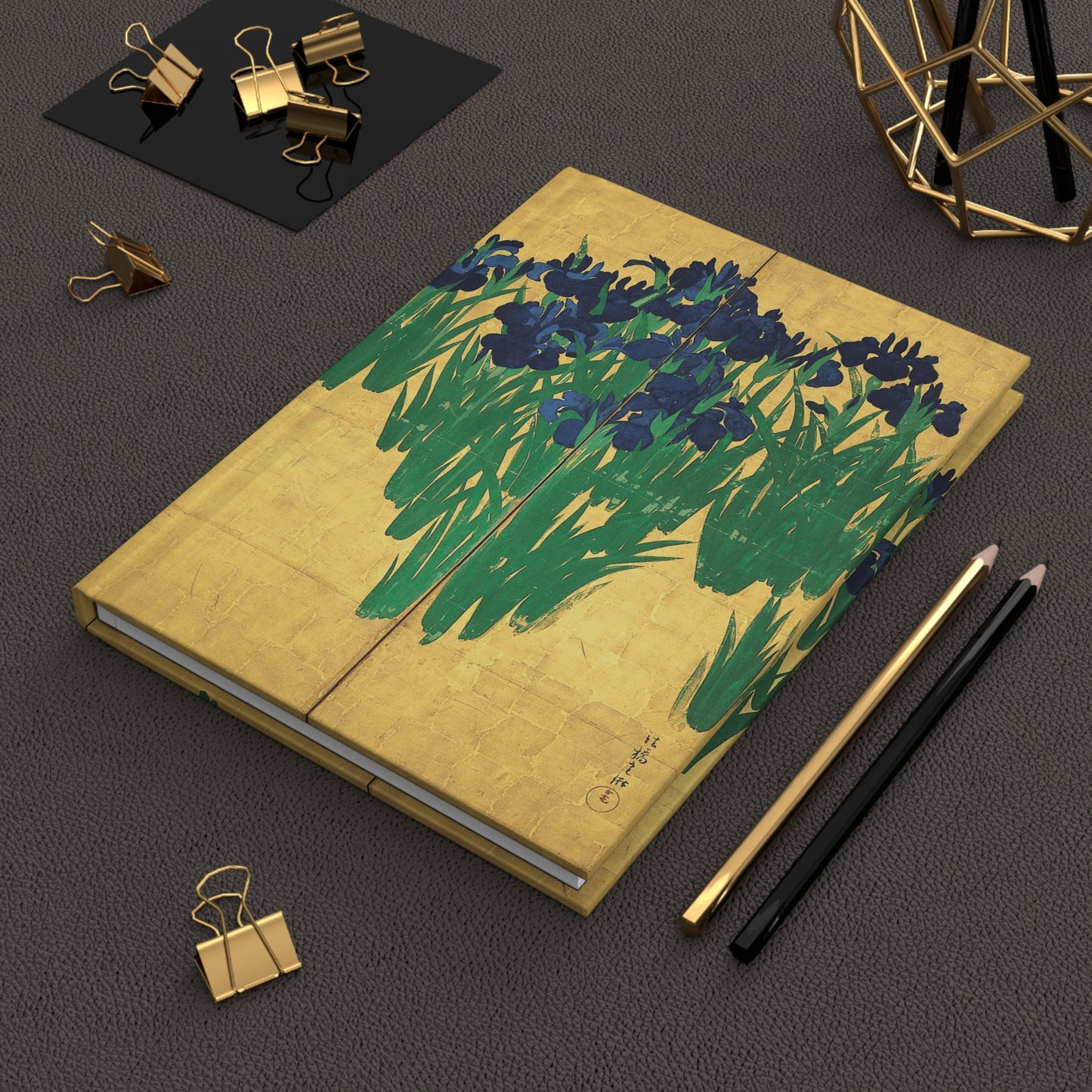
007 : Ogata Korin - Irises Screens (Kakitsubata-zu byobu)
The Visual Language: Composition & Detail
Ogata Korin's Irises Screens (Kakitsubata-zu byobu) is a monumental masterpiece that brilliantly blurs the boundary between fine art and graphic design.
Spanning a pair of six-panel folding screens, the composition is strikingly simple yet overwhelmingly lavish, utilizing only three primary elements: a dazzling gold-leaf background, deep ultramarine blue (azurite) for the blossoms, and vibrant malachite green for the leaves. Korin masterfully creates an infectious, musical rhythm across the screens by using stencils to repeat specific floral patterns.

The right screen features clusters of flowers arranged in a dynamic, zigzagging "W" shape, while the left screen presents them along a bold diagonal line. Furthermore, Korin incorporates varying perspectives—looking down at the irises on the left screen and viewing them from a distance on the right—producing a profound sense of depth and vitality within the flat, highly decorative golden space.
The Cultural Soul: Symbolism & Philosophy
Beneath its gorgeous surface, the artwork carries a profound literary resonance.
The motif of the irises is directly drawn from the famous "Journey to the East" chapter in the 10th-century classical Japanese literature, The Tales of Ise.
In the story, the protagonist (often associated with the poet Ariwara no Narihira) stops at a place called Yatsuhashi (Eight Bridges) in Mikawa Province, where beautiful irises are in full bloom.
Stricken with homesickness, he composes an acrostic poem using the five syllables of "ka-ki-tsu-ba-ta" at the beginning of each line to express his longing for his beloved wife left behind in the capital.
By painting only the irises without the human figures or the bridges, Korin evokes this deep sense of melancholy, nostalgia, and the elegant aristocratic culture of the Heian period. It is a brilliant example of expressing a rich literary world symbolically through the pure power of design.
The Aesthetics of Subtraction and a Living Legacy
One of the most intriguing aspects of this work is Korin’s bold decision to omit the "Eight Bridges," which are central to the original literary episode.
By stripping away all narrative elements except the flowers, he elevated the painting into a realm of pure, abstract design, trusting the educated viewers of the Edo period to complete the scene in their minds. Interestingly, about a decade later, Korin painted another masterpiece, the Eight-Planked Bridge screens (Yatsuhashi-zu byobu), where the bridge is prominently featured.

This stark contrast highlights his ongoing experimentation with composition and storytelling. Today, the legacy of the Irises Screens endures not only in museums but in everyday Japanese life; a section of the right screen graces the reverse side of the current Japanese 5,000-yen banknote, proving that Korin's timeless design continues to captivate the nation centuries later.