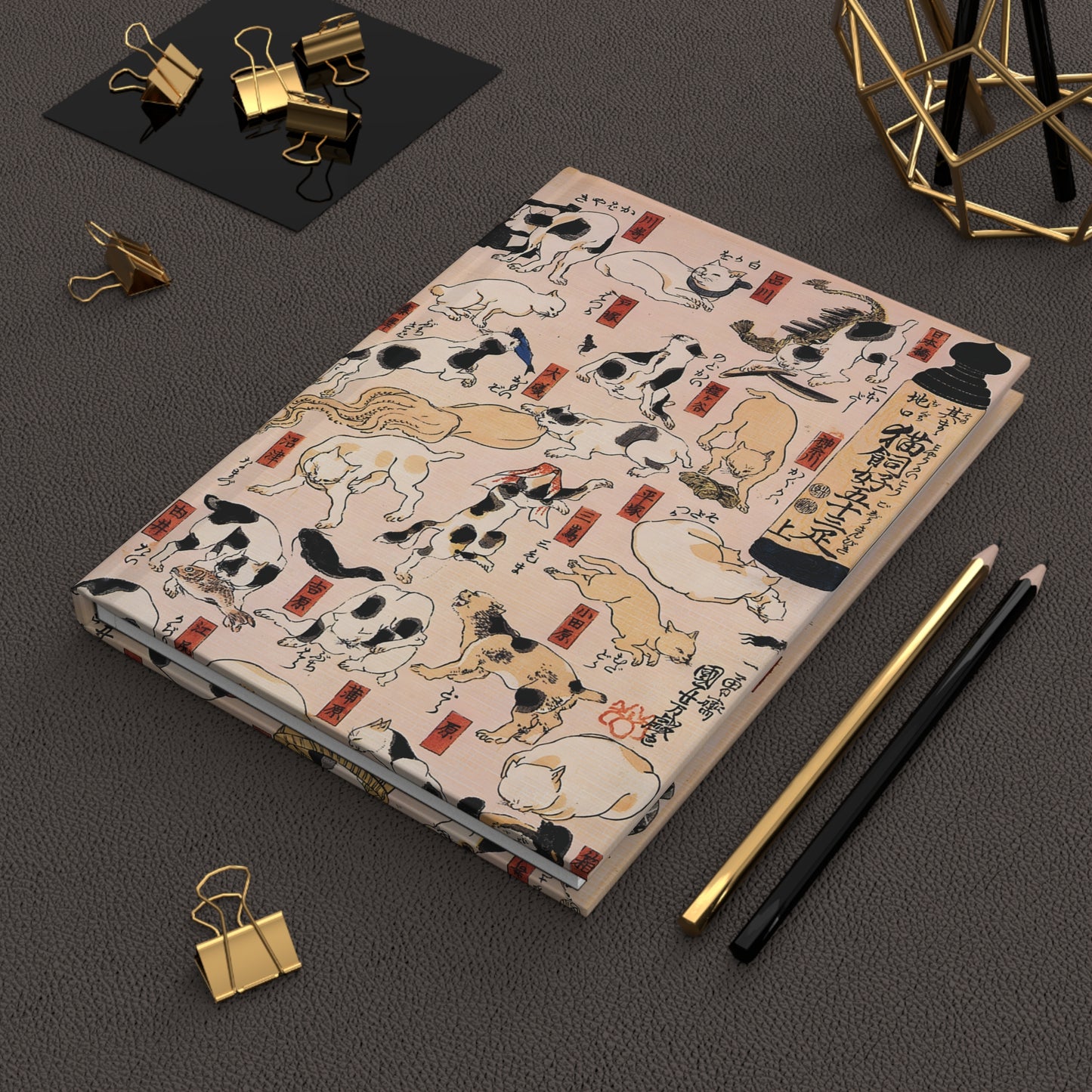
008 : Utagawa Kuniyoshi - Cats Suggested As The Fifty-three Stations of the Tokaido
The Visual Language: Composition & Detail
Utagawa Kuniyoshi's Cats Suggested As The Fifty-three Stations of the Tokaido is a masterpiece that showcases the artist's exceptional observational skills and precise draughtsmanship.
Originally designed as an ōban triptych (a three-part large woodblock print), this work features an impressive patchwork of fifty-five cats, each depicted in a unique, highly expressive posture.
Whether curling up asleep, enthusiastically grooming, playfully catching mice, or begging for food, Kuniyoshi captures the soft curves, muscular tension, and natural movements of the felines with astonishing realism.
Despite the seemingly chaotic arrangement, the diverse forms and patterns of the cats create a lively, rhythmic composition across the wide format, transforming an everyday subject into a dynamic visual feast.
The Cultural Soul: Symbolism & Philosophy
This artwork is a brilliant example of jiguchi-e, a genre based on visual puns and wordplay that was immensely popular among Edo-period commoners.
Kuniyoshi playfully parodied the famous fifty-three post stations of the Tokaido road, matching each station's name with a phonetically similar phrase related to feline behavior.
For instance, the starting point, "Nihonbashi," becomes "Nihon dashi" (two pieces of dried bonito stock), and the final destination, "Kyo" (Kyoto), is humorously depicted as "Gyau," the squeak of a mouse caught by a cat.
Created around 1848, following the strict Tenpo Reforms that banned luxurious depictions of actors and courtesans, this print embodies the rebellious and resilient spirit of the Edo people, who used humor, parody, and anthropomorphism to navigate difficult times.
A Master's Devotion: The Unrivaled Love for Cats
Beyond its clever wordplay, this artwork is a profound testament to Kuniyoshi's legendary love for cats. He was an unparalleled ailurophile who often kept more than a dozen cats at a time and was even known to paint with a kitten nestled in the breast of his kimono.
His devotion was so deep that he maintained a dedicated Buddhist altar in his home, complete with mortuary tablets (ihai) and a death register (kakochō) for his deceased feline companions.
According to one famous anecdote, he immediately expelled his disciple, Yoshimune, who had secretly thrown a dead cat into a river instead of bringing it to the Ekoin temple for a proper burial.
This extraordinary affection and intimate daily coexistence enabled Kuniyoshi to breathe unparalleled life and character into the cats he drew.

Utagawa Kuniyoshi (1798–1861)
A towering master of Ukiyo-e, Kuniyoshi revolutionized Japanese woodblock prints with his dynamic imagination and dramatic energy.
Renowned for his epic warrior scenes and mythical creatures, his work brought a cinematic intensity to traditional themes. A versatile genius with a playful wit—famously reflected in his love for cats—his bold graphic style continues to be a profound influence on modern illustration and global design today.
<References>
Minna no Chishiki Chotto Benricho, "Hanjie/Jiguchie - Utagawa Kuniyoshi: Cats Suggested As The Fifty-three Stations of the Tokaido"
The Adachi Woodcut Prints, "Report on the 'Edo Nyanko' Exhibition at the Ota Memorial Museum of Art: Deeply Enjoying Kuniyoshi's Love for Cats"
The Adachi Woodcut Prints, "Kuniyoshi's Pun Explosion! The Feline Tokaido 'Cats Suggested As The Fifty-three Stations of the Tokaido' Part 1-2"
ARTLOGUE, "Art x Cats: The Heart-Healing Relationship Between Art and Cats Seen in Kuniyoshi's Ukiyo-e Works in the Edo Period"
ARTISTIAN, "A Compilation of Episodes Related to Utagawa Kuniyoshi's Cats"
Wikipedia, "Utagawa Kuniyoshi"