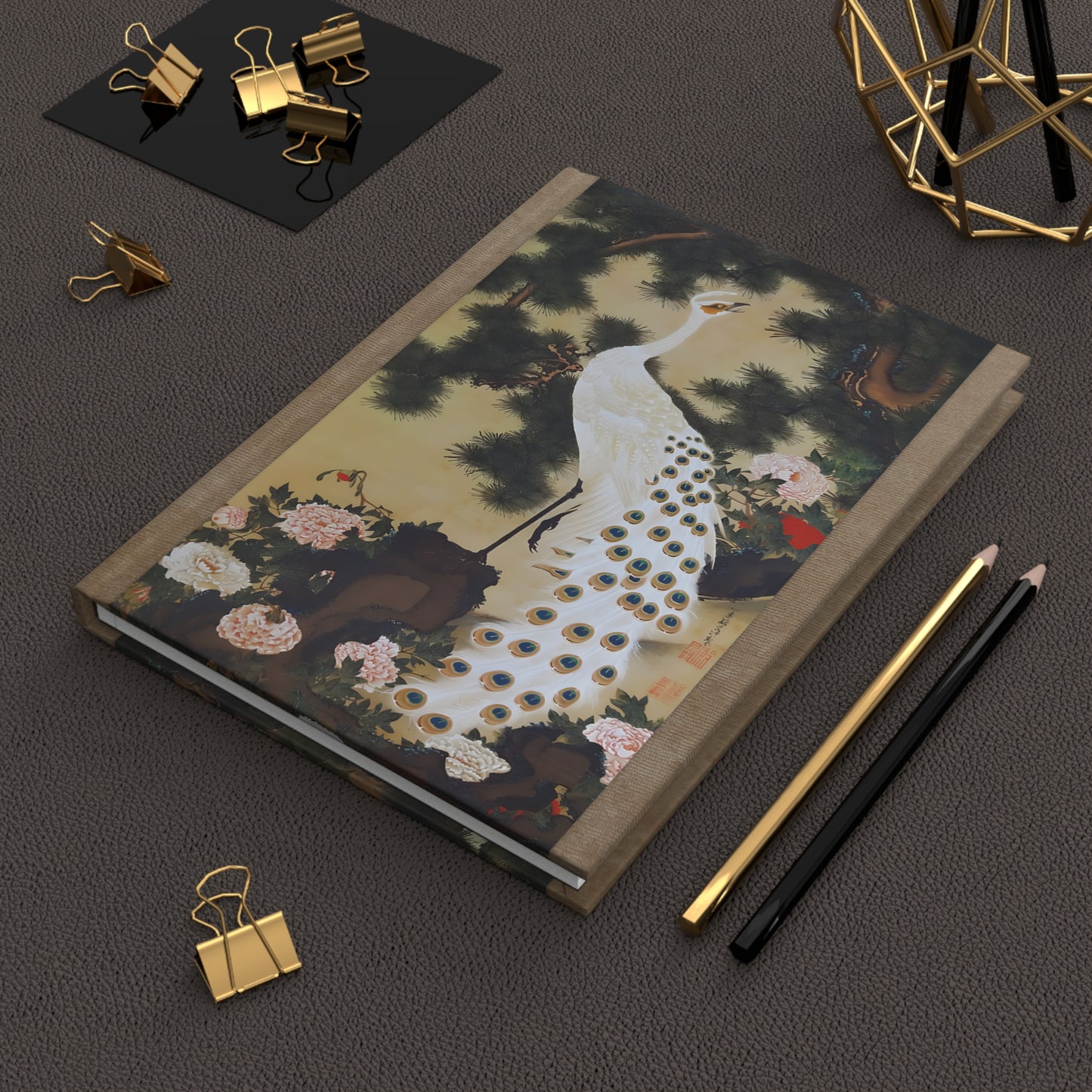
014 : Ito Jakuchu - Peacock and Phoenix (Kujaku Houou-zu)
The Visual Language: Composition & Detail
Ito Jakuchu's Peacock and Phoenix (Kujaku hoo-zu) is an exquisite pair of hanging scrolls (kakejiku) painted on silk, believed to have been created around 1755.
This period predates his famous 30-scroll masterpiece, Colorful Realm of Living Beings (Doshoku sai-e), representing an early yet magnificent stage in his artistic career.
The artwork showcases Jakuchu's youthful yet extraordinary meticulousness, with highly detailed brushwork that captivates the viewer.
On one scroll, a dignified white peacock with delicate plumage stands elegantly upon a rock.
On the other, a vibrant, mythical phoenix dances dynamically beneath the radiant red sun. Both majestic birds are framed by the sturdy branches of pine trees and lush, blooming peonies.
This precise, ultra-realistic brushwork paired with the bold contrast between the pure white peacock and the vividly colored phoenix demonstrates his unparalleled technical brilliance.
The Cultural Soul: Symbolism & Philosophy
This masterpiece is richly layered with auspicious symbolism deeply rooted in East Asian philosophy. The white peacock, surrounded by peonies—known as the "King of Flowers"—symbolizes wealth, nobility, and the power to ward off evil.
The phoenix, the mythical "King of Birds" looking up at the rising sun, is a sacred creature believed to appear only during times of peace to announce the arrival of an exceptional ruler.
Furthermore, the evergreen pine trees framing the birds are classic symbols of longevity.
Through this congregation of highly auspicious motifs, the devout Jakuchu expressed a profound prayer for an eternal, peaceful utopia, reflecting the Edo period's appreciation for harmony and prosperity.
The 83-Year Mystery: A Masterpiece Rediscovered
Beyond its artistic mastery, this painting carries a highly dramatic history.
It was first introduced to the public in 1926 by the art magazine Kokka as part of the collection of Marquis Asano Nagakoto, the 12th lord of the Hiroshima domain.
After being designated as an Important Art Object in 1933, the scrolls mysteriously vanished. For over eight decades, their whereabouts remained entirely unknown, turning the artwork into a legendary lost masterpiece.
Miraculously, the scrolls were rediscovered in 2015, just in time for the 300th anniversary of Jakuchu's birth.
Now housed at the Okada Museum of Art, the re-emergence of this pristine work sparked a massive "Jakuchu boom" in Japan, drawing around 440,000 visitors in just one month during a 2016 exhibition, proving the timeless power of his art.

Ito Jakuchu (1716–1800)
A legendary master of the Edo period renowned for his eccentric, ultra-realistic, and brilliantly colored depictions of the natural world.
Best known for his mesmerizing paintings of roosters and the monumental series Doshaku Saie (Colorful Realm of Living Beings), his meticulous technique and obsessive attention to detail transcended traditional styles, creating a vivid, imaginative realism that continues to captivate modern audiences worldwide.