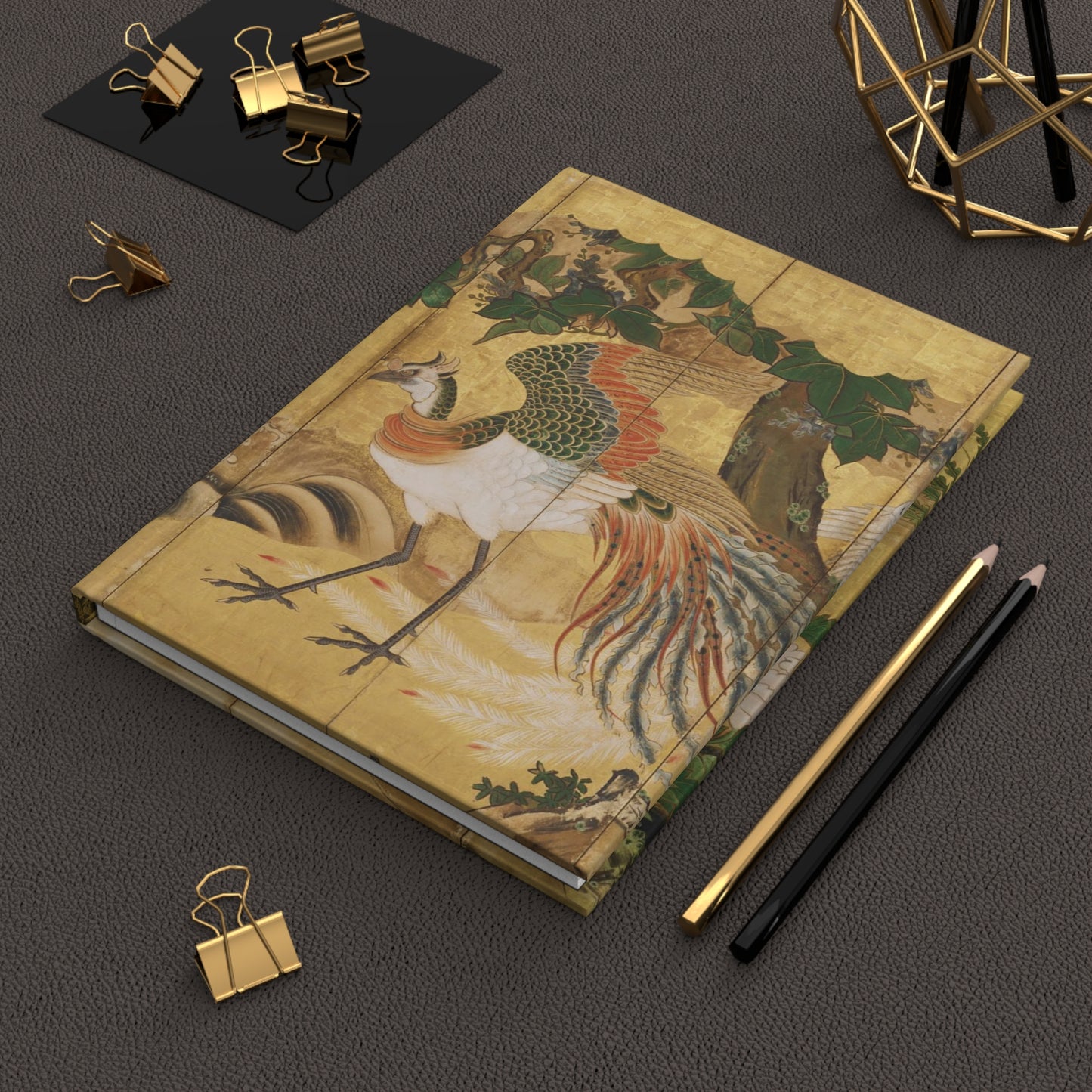
025 : Kano School - Folding Screen with Design of Chinese Phoenixes
The Visual Language: Composition & Detail
Created during the Edo period by artists of the renowned Kano School, the Folding Screen with Design of Chinese Phoenixes is a magnificent pair of six-panel folding screens measuring 187 by 358 centimeters each.
Painted in vibrant colors over a brilliant gold-leafed background, the artwork depicts a magnificent male and female pair of mythical phoenixes.
The composition is masterfully balanced across the two screens: the left screen features a phoenix paired with bamboo and peony flowers, while the right screen showcases the other phoenix alongside a paulownia tree.
True to the Kano School's signature style, the brushwork is remarkably thick, bold, and dynamic, lending the screens an overwhelmingly majestic and masculine vigor.
The dazzling, five-colored plumage of the birds stands out in striking contrast against the opulent gold, creating a breathtaking visual impact suited for a grand architectural space.
The Cultural Soul: Symbolism & Philosophy
The central motif of this masterpiece is deeply rooted in ancient Chinese philosophy and mythology.
The phoenix (known as Hoo in Japanese) is a sacred, auspicious bird believed to possess the features of various animals.
According to legend, these immortal creatures reside only in paulownia trees and feed exclusively on bamboo seeds.
While this traditional subject was originally imported from China, it was gradually adapted into a uniquely Japanese aesthetic, establishing the phoenix as a supreme symbol of auspiciousness, peace, and eternal prosperity.
Furthermore, the depiction of the birds as a mated pair—the male (Ho) and the female (O)—symbolizes the harmonious balance of Yin and Yang, representing ultimate cosmological harmony and conjugal bliss.
The Painters of Power: The Kano School's Authority
A fascinating aspect of this painting lies in the identity of its creators: the Kano School.
Founded in the late Muromachi period by Kano Masanobu, the Kano School grew to become the largest and most influential lineage of painters in Japanese art history,surviving for approximately 400 years until the early Meiji period.
They secured an unparalleled position as the official painters for the Tokugawa shogunate during the Edo period. Knowing this historical context reveals why the Folding Screen with Design of Chinese Phoenixes exhibits such a courageous and muscular style.
The Kano painters were tasked with creating large-scale works that not only decorated the castles and palaces of the samurai elite but also visually projected the absolute authority, dignity, and power of the rulers.
By transforming an elegant, auspicious bird into a monumental display of strength and grandeur, the Kano artists perfectly fulfilled their role as the visual architects of shogunal power.
--------------------------------------------------------------------------------