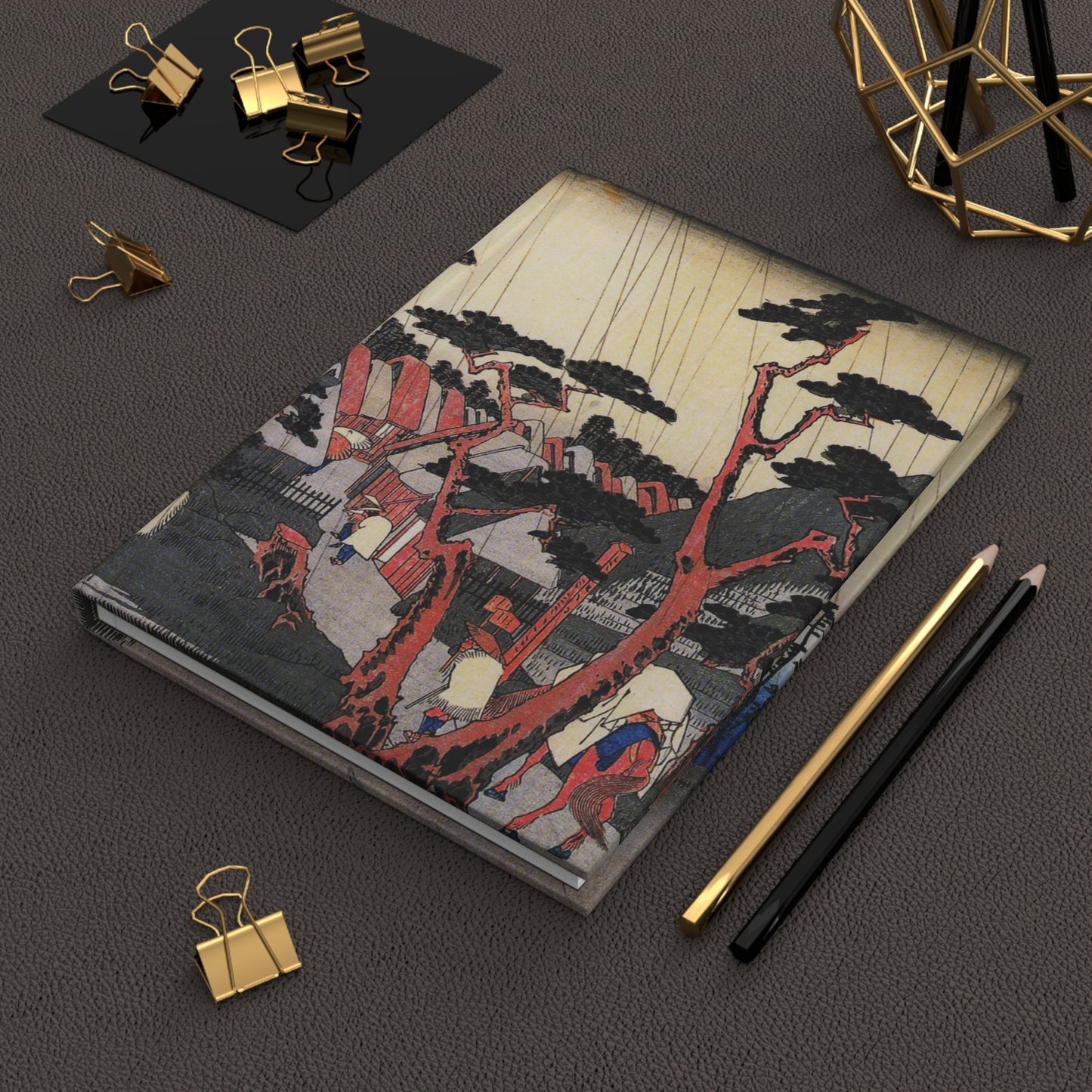
004 : Hiroshige - Oiso - Tora's Rain
The Visual Language: Composition and Detail
In Oiso: Tora's Rain from the famous series The Fifty-three Stations of the Tokaido, Utagawa Hiroshige masterfully balances the composition by dividing the picture plane into two contrasting halves.
On the left, he depicts a quiet, expansive view of the sea, historically known as Koyurugi Beach, evoking a sense of tranquility.

In striking contrast, the right side features the bustling post town of Oiso with its overlapping storefronts and a bent tree leading the viewer's eye toward Mount Koma in the background.
Furthermore, Hiroshige utilizes his groundbreaking technique of rendering rain through fine, sharp lines—a method that visually captured the atmosphere and deeply influenced Western art.
The Cultural Soul: Symbolism and Philosophy
The subtitle of this print, "Tora's Rain" (Tora ga Ame), carries profound emotional and cultural symbolism.
In Japanese tradition, it refers to the rain that falls around the 28th day of the 5th month of the lunar calendar, which is recognized as a seasonal word (kigo) for summer.
This specific rain is poetically believed to be the tears of Tora Gozen (also known as Torajo), a courtesan from Oiso, mourning the tragic death of her beloved, Soga Juro.
Through this landscape, Hiroshige captures not just the physical weather, but the deeply ingrained Japanese sensibility of projecting human sorrow and eternal love onto the phenomena of nature.
A Tale of Love and Revenge: The Legend Behind the Rain
The story of Tora Gozen and Soga Juro is deeply connected to the "Revenge of the Soga Brothers," one of Japan's three major revenge plots.
In 1193, the Soga brothers successfully avenged their father's death during a grand hunting event hosted by the shogun Minamotono Yoritomo at the foot of Mount Fuji.
However, Juro lost his life in the ensuing battle. Tora Gozen, who fell in love with Juro when she was 17 and he was 20, was left heartbroken.

She subsequently became a Buddhist nun to pray for the soul of her lover.
It is said that she built a hermitage at the foot of Mount Koma—the very mountain depicted on the right side of this print—and spent the rest of her life mourning and praying for him.
This poignant history transforms the artwork into a timeless monument of devotion.
Utagawa Hiroshige (1797–1858)

The legendary master of Ukiyo-e landscape prints who revolutionized the genre with his poetic use of light, season, and atmosphere.
Known for his lyrical compositions, his masterpiece "The Fifty-three Stations of the Tōkaidō" captured the heart of Edo Japan. His unique "Hiroshige Blue" and dynamic perspectives profoundly influenced Western artists like Van Gogh and Monet.